The World Cup is evolving, and the upcoming 2026 World Cup will be more than just another edition; it promises to be historic.
The tournament, also known as the 2026 World Cup, will transform football on several levels, with three host nations (the United States, Canada and Mexico) and a new format.
More teams, more matches and, above all, more stars. It will be the biggest World Cup ever.
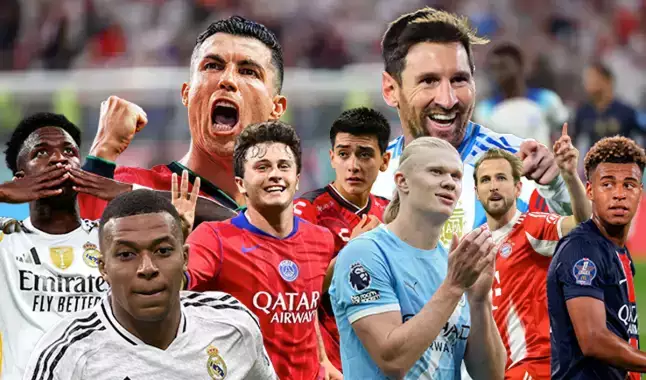
Find out who the confirmed stars of the world’s elite are, the players who could dominate the 2026 World Cup, the young talents highlighted by FIFA and how all this impacts sports betting.
What you’ll find in this article:
- What makes the 2026 World Cup different?
- The world’s top stars
- Young talents highlighted by FIFA
- Legends and established stars
- The 2026 World Cup with Betting Academy
- Where to watch the World Cup?
- The best bookmakers for betting on the 2026 World Cup
The upcoming FIFA World Cup promises to be one of the most memorable in football history.
If you want to get a sneak peek at what might happen at this World Cup, read on to find out all about the stars of the tournament.
Follow today's matches in the Academy
What makes the 2026 World Cup different?
Before we talk about the stars, let’s take a closer look at the context in which the competition will take place. This won’t be just another tournament; it will mark a structural transformation of the World Cup itself.
- A World Cup across three countries
The 2026 World Cup will be a unique edition, marking the first time that three countries have hosted the tournament.
The 2026 World Cup will be hosted by:
- The United States;
- Canada;
- Mexico
This decision by FIFA has direct implications for the performance of teams and players.
Unlike previous editions, where the teams remained relatively concentrated, here there will be long journeys, different time zones and quite distinct climatic conditions.
This calls for more demanding physical management. For the stars, this means that talent alone is not enough; consistency throughout the entire tournament will be required.
- New format: 48 teams
Another key point is the new format. The World Cup will now feature 48 teams, a significant increase from the traditional 32, and a total of 104 matches, making it the biggest tournament ever.
This increase creates more opportunities for players to shine, particularly in the early matches, where the imbalance between teams may be greater.
However, it also increases accumulated fatigue, which could have a direct impact on performance in the later stages of the 2026 World Cup.
The new format means:
- More matches (104 in total);
- Expanded group stage;
- More teams from under-represented continents;
- More opportunities for stars to shine;
- More data to analyse, which may be particularly relevant to your bets.
If you enjoy analysing matches, this is set to be a real spectacle on the pitch.
Explore the previews and stats on the Betting Academy.
Get ready to make the most of this new World Cup format.
The world’s top stars
When discussing the leading figures of the 2026 World Cup, certain names inevitably stand out. These are players who not only dominate world football but also continue to perform at the very highest level, both for their clubs and their respective national teams.
For many of them, this 2026 World Cup will be more than just a competition; it represents the definitive consolidation of their legacy in international football.
At the same time, the conclusion of the qualifiers also brought some major surprises. Not all the stars managed to secure a place at the 2026 World Cup.
The absence of certain names shows that, even at the highest level, football remains unpredictable.
Below, we analyse each of these players, the journey that has brought them this far, and why they are considered indispensable for any national team hoping to triumph at the 2026 World Cup.
- Kylian Mbappé (France)
One of football’s leading figures, Kylian Mbappé heads into the 2026 World Cup as the undisputed leader of the French national team.
World champion in 2018 and the star of the 2022 final, where he scored three goals, Mbappé has already shown that he is a player made for major tournaments.
Having been decisive in previous tournaments, he continues to develop as a player, combining speed, tactical intelligence and clinical finishing.
His ability to make a decisive impact in big games makes him one of the main contenders to shine in this tournament.
- Team | France.
- Career | He was spotted at the age of 16 by AS Monaco, where he made his professional debut. In 2017, he moved to Paris Saint-Germain, where he became one of the world’s leading footballers. He currently plays for Real Madrid CF, having completed his contract with PSG. A World Cup winner in 2018, he has already demonstrated his ability to decide finals and high-pressure matches.
- Why he is considered top-class | His speed and finishing ability make him a feared striker. At the World Cup, he will be a key figure in France’s attack.

- Erling Haaland (Norway)
Erling Haaland is currently one of the leading strikers in world football.
With a track record of scoring in every competition he has played in, the Norwegian striker poses a constant threat to any defence.
His participation in the 2026 World Cup adds even more interest to the tournament, particularly given the direct impact it could have on the goalscoring markets.
- Team | Norway.
- Career | He came through the ranks at Bryne FK, where he stayed for only a short time, before joining the Molde FK squad. He quickly made a name for himself in Austria whilst playing for Red Bull Salzburg, where he won an Austrian league title and an Austrian Cup. In the UEFA Champions League, whilst still at Salzburg, he scored at least one goal in five consecutive matches before moving to Borussia Dortmund and, more recently, to Manchester City.
- Why he is considered elite | Haaland is a goal-scoring machine. His positioning and physical strength make him a lethal striker. At the 2026 World Cup, he will be one of the key attacking players.

- Vinícius Júnior (Brazil)
In Brazil’s case, Vinícius Júnior has emerged as one of the team’s key attacking players. The winger has been instrumental and heads into the 2026 World Cup as one of the Brazilian national team’s key assets.
His development in European football has turned him into a decisive player, capable of turning matches around with moments of individual brilliance.
At the FIFA World Cup, he will be one of Brazil’s key attacking weapons, bringing unpredictability and creativity to the attack.
- Team | Brazil.
- Career | From an early age, Vinícius Júnior has been associated with Flamengo, where he turned professional in 2017. He was transferred to Real Madrid later that year, becoming the second-highest transfer fee in the history of Brazilian football. While playing for Real Madrid, he was a key player in their UEFA Champions League victory, scoring the goal that secured their 14th title. He currently continues to play for Real Madrid and the Brazilian national team.
- Why he is considered top-class | Extremely fast, creative and unpredictable, Vinícius is able to break down compact defences and decide matches with goals and assists. At the World Cup, he will be Brazil’s main attacking weapon.

- Harry Kane (England)
England’s captain and leading striker, Harry Kane remains one of the most consistent forwards in international football.
His tactical intelligence and finishing ability make him an extremely effective player, especially in competitions such as the 2026 World Cup, where the finer details make all the difference.
- Team | England.
- Career | Having come through the ranks at Tottenham Hotspur, Harry Kane has established himself as one of the most consistent attacking threats in world football over the last decade. While playing for the “Spurs”, he was the Premier League’s top scorer on several occasions, before moving to FC Bayern Munich. An England international, he remains a key figure for both the German club and the national team.
- Why he is considered top-class | A complete forward, he combines clinical finishing, an ability to provide assists and tactical intelligence. At the World Cup, he will be England’s go-to man in front of goal.

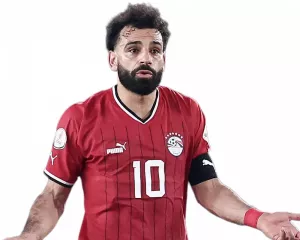
- Mohamed Salah (Egypt)
Mohamed Salah heads into the 2026 World Cup as the star player of the Egyptian national team.
His experience in top-level competitions, combined with his finishing and attacking ability, makes him a player capable of surprising any opponent.
He will undoubtedly be one of the players to watch in this edition.
- Team | Egypt.
- Career | Trained in Egypt, Mohamed Salah first made his mark at FC Basel, which earned him a move to Chelsea FC in 2014. After spells at AS Roma, it was during his time at Liverpool FC that he established himself as one of the world’s greatest football stars, winning the Premier League and the UEFA Champions League, and he remains at the club to this day. As a member of the Egyptian national team, he is the leading figure and one of the most influential African players of today.
- Why he is considered top-class | Extremely quick in front of goal, Salah can cause havoc in any defence. At the 2026 World Cup, he will be Egypt’s main attacking hope.
- João Neves (Portugal)
João Neves is one of the most promising talents in Portuguese football and heads into the 2026 World Cup as an increasingly influential figure in midfield.
Despite his youth, he has already demonstrated competitive maturity and the ability to take on responsibility in high-pressure matches.
In a tournament such as the World Cup, he will be able to definitively establish himself at the highest level.
- Team | Portugal.
- Career | Having come through the ranks at SL Benfica, João Neves quickly made his mark in the first team, becoming one of the rising stars of European football. In 2024, he moved to Paris Saint-Germain, where he continues to develop at the highest competitive level. A Portuguese international, he has been gaining a regular place in the senior squad, establishing himself as a solid option in midfield.
- Why he is considered top-class | His ability to win the ball back and his passing vision make him fundamental to the team’s organisation and balance. At the 2026 World Cup, he will be a key player in Portugal’s midfield.

- Vitinha (Portugal)
Vítor Machado Ferreira, known as Vitinha, heads into the 2026 World Cup as one of the most technically refined midfielders in European football.
His ability to control the tempo of the game makes him a key figure in the national team’s attacking build-up.
At the World Cup, he could prove decisive in the way Portugal organises its play.
- Team | Portugal.
- Career | Having come through the ranks at FC Porto, Vitinha spent time at Wolverhampton before returning to the Portuguese club. In 2022, he moved to Paris Saint-Germain, becoming a key figure in the French side’s midfield. A Portuguese international, he has established himself as one of the national team’s key playmakers.
- Why he is considered top-class | His vision and passing ability allow him to control the game and create chances. At the 2026 World Cup, he will be essential to Portugal’s attacking build-up.

- Désiré Doué (France)
Désiré Doué He has emerged as one of the new faces of French football and one of the most exciting young players in Europe.
His creativity, dribbling ability and unpredictability make him a constant threat in attack.
In a competitive environment such as the 2026 World Cup, he could prove to be one of the major surprises in the French squad.
- Team | France.
- Career | Having come through the ranks at Stade Rennais, Désiré Doué made a name for himself in Ligue 1 at a very young age, attracting the attention of Europe’s top clubs. In 2024, he moved to Paris Saint-Germain, where he has continued to develop and gain experience. An international for France’s youth teams, he recently joined the senior squad.
- Why he is considered top-class | His creativity and attacking versatility make him a player capable of deciding matches. At the 2026 World Cup, he could be one of France’s major revelations, if selected.

If you haven’t registered with any bookmaker yet, we have some good news for you:
If you open an account with one of the best bookmakers via the Academy’s links, you’ll have access to many more benefits:
- 100 Academy points, that help you level up and unlock exclusive content (like Sports Betting Courses with Paulo Rebelo), and which allow you to order rewards from Academy store.
Young talents highlighted by FIFA
FIFA has highlighted several young players as potential stars of the 2026 World Cup, identifying a new generation ready to make its mark on world football.
With the official confirmation of the 48 teams that have qualified for the World Cup, all the players mentioned are part of squads that have already qualified for the 2026 World Cup.
As such, the presence of these talents no longer depends on qualification but is now exclusively linked to the final decisions of the managers and their competitive performance at the World Cup.
More than just prospects, these players represent real solutions for their national teams in a tournament where attention to detail, creativity and individual decision-making make all the difference.
This list does not represent confirmations of squad selection, but rather projections based on talent and recent development.
- Lamine Yamal (Spain)
With Spain already confirmed for the 2026 World Cup, Lamine Yamal é one of the young players attracting the most attention. His influence on European football makes him one of the most talked-about names at the World Cup.
FIFA has highlighted him as a potential World Cup debutant and his participation has already been confirmed by the Spanish Football Federation.

- Pau Cubarsí (Spain)
In a highly demanding tournament such as the World Cup, Pau Cubarsí’s quality in bringing the ball out and in defence could be essential to ensuring stability.
His reading of the game and defensive solidity are fundamental to maintaining the team’s balance. In knockout stages, consistency in defence is decisive, and Cubarsí offers that stability.
He is a defender with great tactical maturity, proven at the highest competitive level. He could be included in the squad as a solid option for the Spanish national team.

- Estêvão Willian (Brazil)
O Brazil is, as expected, among the teams that have qualified, which opens the door for Estêvão to join the squad. Despite the fierce competition, his creative and unpredictable style could prove to be a key asset.
He is quick, creative and capable of playing in various attacking positions. At the 2026 World Cup, he could be one of Brazil’s surprise stars, bringing dynamism to the attack.

- Franco Mastantuono (Argentina)
Argentina has also secured its place in the tournament, which puts Mastantuono in an interesting position. Although competition is fierce, his technical profile fits in with the national team’s development.
He is an attacking midfielder with great game intelligence, standing out for his vision, passing ability and control of the tempo. He can act as a link between midfield and attack, offering creative solutions in central areas.

- Kendry Páez (Ecuador)
With Ecuador having qualified, Kendry Páez has a real opportunity to make his mark on the big stage. His creativity could prove particularly valuable in closely contested matches; he has the ability to dictate the pace of the game and can be decisive in quick transitions.
If selected, he could be one of the team’s attacking driving forces, particularly in quick transitions, where his vision and technique can create competitive advantages.

- Gilberto Mora (Mexico)
As the host nation, the Mexican team will face increased pressure, and Gilberto Mora may take charge of the build-up play, helping Mexico control the pace of the game in the face of pressure from the crowd.
He is a creative midfielder with a strong ability to drive forward and link up play between areas. He stands out for his attacking vision and is regarded as one of the great prospects of Mexican football.

- Ryunosuke Sato (Japan)
Ryunosuke Sato He stands out as one of the most promising players of the new generation of Japanese footballers, particularly for his tactical intelligence and ability to adapt to different phases of the game.
Having come through a system where positional discipline is highly valued, he stands out for his reading of the game, discipline and efficiency when on the ball.
In the context of the 2026 World Cup, he could be a key player for Japan precisely because of his versatility.

- Yan Diomande (Ivory Coast)
A rising star, Yan Diomande is an attacking player who combines speed, mobility and clinical finishing.
His presence in the final third, combined with his ability to attack, makes him a dangerous weapon against less organised defences.
His ability to convert few chances into goals could prove decisive at the FIFA World Cup.

- Ibrahim Mbaye (Senegal)
Ibrahim Mbaye has emerged at a time of generational change within the Senegalese national team, where new attacking options are beginning to come to the fore.
A creative winger with a strong ability in one-on-one situations. He stands out for his unpredictability, acceleration and ability to create chances.
At the 2026 World Cup, he could be a key player, particularly in matches where Senegal need to break down organised defences.

- Luke Brooke-Smith (New Zealand)
Luke Brooke-Smith fits into the New Zealand squad, which traditionally relies on defensive organisation and quick transitions.
His profile fits this approach perfectly. He is a player who favours runs into space, exploiting defensive disorganisation to create danger.
In a tournament such as the 2026 World Cup, where New Zealand may face theoretically superior teams, this type of approach could prove decisive.
- Lennart Karl (Germany)
Lennart Karl emerges as part of the new wave of German talent, at a time when the national team is looking to renew itself and regain its competitive edge.
His technical and attacking profile fits into a more dynamic and modern approach to the German game. However, his lack of experience in the senior squad means his inclusion depends on his development in the short term.
If included in the final squad, Karl could act as a rotational player capable of changing the pace of the game.

Legends and established stars
As well as the new generation and stars at the peak of their careers, the 2026 World Cup will also be marked by the possible presence of some of the greatest football icons of recent decades.
Will this be the final stage for some of football’s greatest legends?
Players such as Cristiano Ronaldo and Lionel Messi remain key figures. They reach this stage in a different context, where age, physical management and the decisions of their respective national teams will carry decisive weight.
In the same context, names such as Kevin De Bruyne, Harry Kane, Virgil van Dijk, Reece James and Robert Lewandowski, who, despite still competing at the highest level, may view this tournament as one of the last major international stages of their careers.
In Latin America, names such as Guillermo Ochoa and Radamel Falcao also represent an experienced generation, where continuity in the national teams may depend on the emergence of new talent.
More than just guaranteed fixtures, these players symbolise a period of transition in world football. This reinforces the coexistence of experience and youth, as a passing of the torch.
The 2026 edition will mark more clearly the arrival of a new generation of leading figures in football.
The 2026 World Cup with Betting Academy
If you just want to follow the tournament as a fan, simply check the match schedule for the 2026 World Cup.
But if you want to take your betting a step further, we can be a valuable ally. So that you can analyse, anticipate and bet wisely, at the Betting Academy you’ll find essential tools throughout the FIFA World Cup.
At the Academy you’ll find:
- Previews and tips for the 2026 World Cup;
- Detailed statistics;
- Articles about bets and exclusive promotions, for safer betting;
- Reviews of the best bookmakers available, so you can make a more informed choice.
The difference between betting on intuition and betting based on data is huge, and in a tournament like the World Cup, this can be decisive.
During the 2026 World Cup, the Academy will serve as a comprehensive support centre.
Where to watch the World Cup in Kenya?
In Kenya, the 2026 World Cup can be watched on various platforms.
- DStv | GOtv 

The SuperSport channels hold the broadcasting rights for the 2026 World Cup in Kenya.
- Through Subscription.
- Supersport channels.
- The channels have not yet been officially confirmed, but these are the most likely ones.
- KBC
- Free-to-air option in Kenya;
- Usually broadcasts selected matches, including key games.
- Coverage details confirmed closer to the tournament.
- FIFA+ 
- Available in Kenya
- May offer some live matches depending on rights, plus highlights and replays.
The best bookmakers for betting on the 2026 World Cup
For anyone following the tournament closely, whether as a fan or a punter, the key will lie in analysis. Reading the game, anticipating trends and understanding the context will be just as important as the goals that will be scored in this edition.
And in this regard, whoever is better prepared will always have the upper hand.
You can place bets at the following bookmakers:


Don’t miss out on the biggest spectacle in football!
Explore the Betting Academy and place your best bets on the 2026 World Cup.
✅ Are the young players mentioned by FIFA confirmed for the 2026 World Cup?
No. FIFA has simply highlighted players with potential.
✅ How many teams will take part in the 2026 World Cup?
Given the new format, 48 teams are taking part in this World Cup.
✅ Is it worth betting on the 2026 World Cup?
Yes, especially with a thorough analysis based on data and the competitive landscape. Betting Academy could be just the help you need to validate your predictions.
✅ Which bookmakers can I use to bet on the 2026 World Cup in Kenya?
You can bet with a number of them. Find the best bookmakers available in the country.